
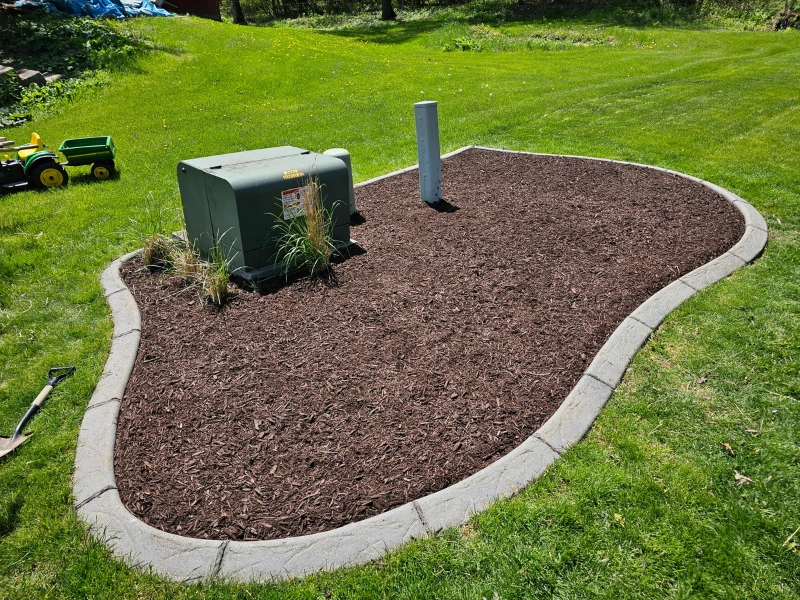
Mulching feeds soil life, builds organic matter, forms better pore space for air and water, and protects soil structure. Understanding how mulching improves soil structure in detail is important. It helps you make accurate decisions for overall soil improvement and vegetation.
A well-maintained and regularly mulched soil lays a solid foundation for healthy soil. So, what is mulch made of? Are there different mulch types? What’s best for my soil?
In this blog, you’ll get clear answers and understand how mulching improves soil structure, and which mulching method will be suitable for your soil.
What is Mulch Made of? What Are The Different Types of Mulch?
Mulch is made of wood chips, shredded hardwood, stones, or organic compost. There are two prominent types of mulch,
Organic:
Shredded bark, wood chips, straws, compost, leaf mulch, manure, and any such plant or animal-based material are considered organic mulch. These materials decompose easily and possess soil-enriching properties to boost soil health.
Inorganic:
Material types such as plastic sheet, crushed seashells, stones, rubber mulch, and landscape fabric are considered inorganic mulch. Unlike organic mulch, these materials do not decompose and don’t have soil-enriching properties.
5 Key Observations Showing How Mulching Improves Soil Structure
Now that you know the different mulch types, it’s time to deep dive into the specifics and observe mulching effects on soil structure.
Below are some of the key observations that show how mulch improves soil quality:
#1. Builds organic matter and nutrients
A soil containing less organic matter struggles to hold water and fails to supply it to plants. Adding organic matter to soil, such as compost, decomposes it and adds humus, increasing the water-holding capacity and producing nutrients. A regular addition of mulch continues to improve fertility, making soil richer in minerals.
#2. Improves biological structure and activity
Biologically poor or compact soil lacks the pore networks and microbial bonding that facilitate root growth. Mulch feeds microbes and earthworms, and their activity forms and combines pore channels, improving biological structure and root penetration. Increased biological activity crushes soil, allowing roots to explore channels between soil aggregates.
#3. Stabilizes moisture and temperature
Continuous dry cycles and extreme temperatures disrupt microbial activity in soil and stress roots. A mulch layer reduces evaporation and handles temperature shifts that safeguard roots and keep microbial activity intact. This insulation from mulch stabilizes moisture, and plants remain healthy through heat and cold spells.
#4. Prevents erosion and surface compaction
Bare soil gets exposed to rain, losing fine particles instantly, and forming a hard layer that repels water. Mulch reduces raindrop impact, preventing soil compaction and erosion of fine soil particles. Less surface compaction minimizes the necessity to replace the soil.
#5. Suppresses weeds and eliminates interference
Weeds interfere with the plant’s growth by cutting off access to water and essential nutrients. Mulching blocks sunlight to weeds, stopping them from germinating. The elimination of weed interference allows plants to have abundant access to water and nutrients for better nourishment.
How to Choose Between Organic and Inorganic Mulching?
Choosing between inorganic and organic mulching relies on your priority. You need to identify your primary objective, i.e., recognize whether you are seeking to improve soil structure, improve drainage, or any other aspect.
Assess your priority based on your site plans, plant types, and maintenance tolerance. Let’s see how you can pick between organic and inorganic mulching.
Prioritize organic mulching when your objective is to:
- Improve soil structure
- Build soil health
- Grow vegetables
- Control temperature
- Restore or plant new beds
- Fix common lawn problems
- Increase water holding capacity
Prioritize inorganic mulching when your objective is to:
- Have a long-lasting cover
- Bear heavy traffic
- Reduce maintenance frequency
- Direct surface drainage
- Retain existing soil moisture
Let Experts Boost Your Soil Health Now!
Mulching and soil improvement go hand in hand. The benefits of mulching for soil health are noteworthy: improved soil health, controlling soil erosion, weed suppression, and much more. Knowing how mulching improves soil structure helps you select an approach that aligns with your objectives to obtain precise results without disrupting soil.
At Ruben’s Lawn Care Services & Dumpster Rentals L.L.C., we offer professional mulching services that uplift your landscape without compromising the soil. We have a wide range of mulch types and applications tailored to your seasonal needs. Our team ensures the mulch is applied evenly, at the correct depth, and with a shiny finish.
Call us now to boost your soil health!
FAQs
1. How do you prepare for mulching?
From the root area, sweep the weeds and debris, edge the bed, loosen the compact soil, and water deeply to keep it moist. Spread the mulch you picked; keep it away from the roots or stems.
2. What color mulch looks best?
There’s no specific mulch color that is viewed as best. Based on your color preference, pick a mulch that blends easily with your landscape and is easy to maintain. For instance, a dark tone adds contrast, whereas natural brown feels more soothing.
3. How much mulch do I need?
It’s hard to project an exact number because it depends on the dimensions of the area and your goals to get mulching done. To estimate, measure the bed, pick a target, or simply connect with our expert: (608) 445-0871 to avoid any miscalculations.
4. What are mulching blades?
Mulching blades, specially shaped lawn mower blades for chopping grass clippings and recirculating them back into the surface for decomposition, maintaining soil nutrition.
5. Is it possible to use both organic and inorganic mulching?
Yes, a hybrid approach can merge the benefits of both mulching types. For instance, for immediate weed control and soil building, use gravel paths and wood chip beds.
