
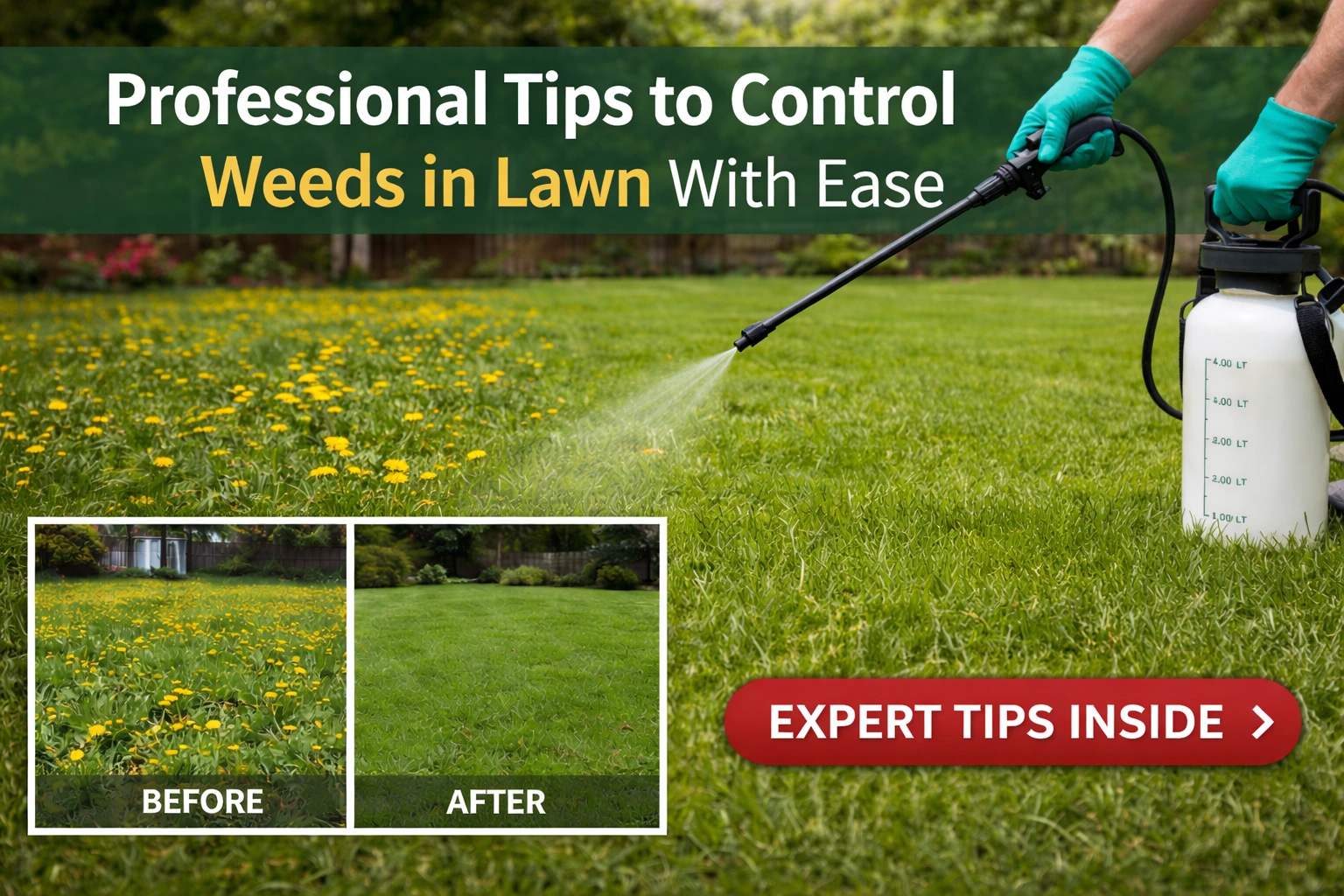
A weed is often tagged as “a plant out of place.” What one homeowner sees as a problem, another might consider as ground cover. Still, most of them find weeds frustrating as they spoil curb appeal, spread aggressively, and leave lawns looking patchy. As lawn care professionals, we often get asked how to control weeds in lawns when we are on site, fixing people’s turf.
To help such proactive lawn owners, we decided to share this informative piece with valuable details about weeds, strategies to control them, safety tips, and a short comparison that helps you understand what professionals bring to the table.
Identify and Understand Types of Weed
Many owners make the rookie mistake of attempting to clear weeds without knowing which ones they are. Our team members emphasize identifying the type as different species respond to different control methods, and accurate identification saves your time, money, and effort.
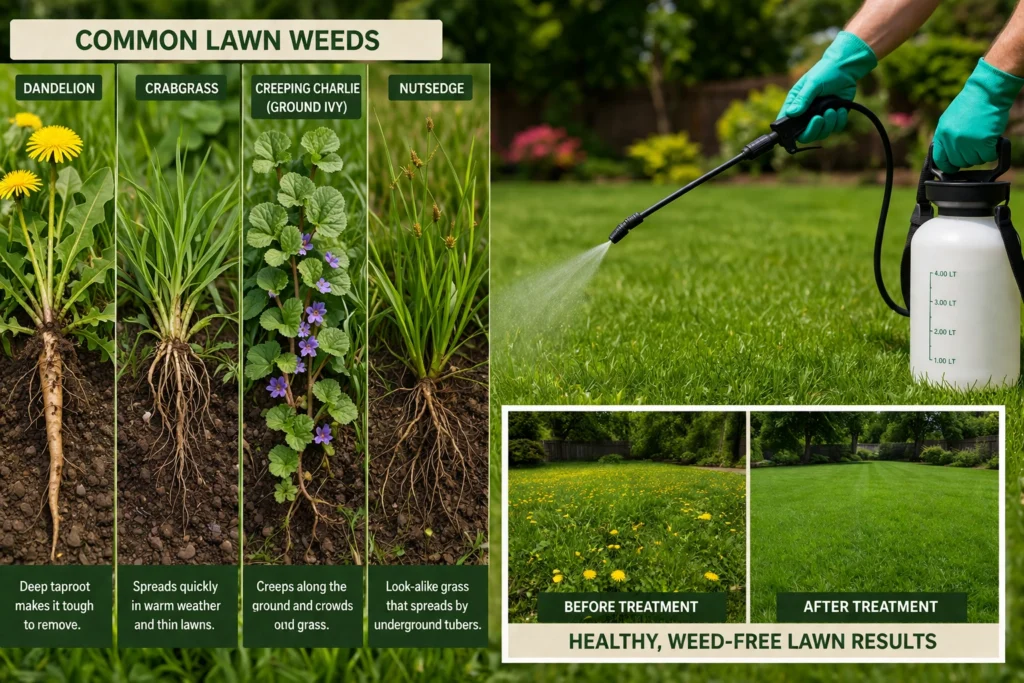
- Broadleaf Weeds: Our experts believe that dandelions, clover, plantain, chickweed, and ground ivy are the most common invaders. These have wide leaves with visible veining and stand out against the lawn. They respond well to selective broadleaf herbicides and often pull cleanly by hand when the soil is moist.
- Grassy Weeds: Our team often observes that crabgrass, foxtail, and annual bluegrass resemble lawn grass but evolve more aggressively or at different times of year. They usually require pre-emergent herbicides or non-selective removal to control spread.
- Sedges: Nutsedge and similar species have triangular stems, grow in clusters, and are stubborn as they spread through underground tubers. In our professional opinion, removing such weeds by hand is ineffective unless the entire tuber system is removed.
Know About the Root Cause of Weed Growth
Once you identify the type of weed, it’s also important that you figure out the root cause that is responsible for weed growth. The reason is simple: you get clarity on how to remove weeds from your lawn using a precise method.
Below, we’ve mentioned some factors that usually allow weeds to exploit your lawn:
→ Poor Soil Health
Nutrient‑depleted or imbalanced soil allows weeds to overgrow grass. When we conducted rigorous soil tests across multiple properties, we realized that most cool‑season grasses flourish at pH 6.0 to 7.0.
In Madison, Wisconsin, where Kentucky bluegrass, perennial ryegrass, and fine fescues are common, maintaining this pH range becomes crucial.
→ Thin or Weak Turf
Over the years, our team has observed that sparse grass creates open space for weed seeds to germinate. Also, while reviewing lawns affected by disease and poor mowing practices, we found that insufficient watering and heavy foot traffic were the most common triggers of thin and weak turf.
→ Soil Compaction
Through extensive field testing, we found that compacted soil limits oxygen, water infiltration, and nutrient movement to grass roots. This weakens the growth of turf species, leaving thin patches and stressed plants. Weeds exploit these conditions, and their shallow, opportunistic root systems can grow where grass roots struggle.
→ Improper Mowing
Our team documents the results after serving different lawns, and their research indicates that cutting grass too short reduces leaf surface area, which limits photosynthesis and weakens the plant’s energy reserves.
This stress weakens the root system, compromising the turf’s capacity to sustain. When the top layer is thinned, gaps open in the lawn, forming ideal conditions for weed seeds to grow.
Expert-Backed Tips to Control Weeds in Lawns
Once weeds are identified and their root causes understood, the next step is applying control methods. The most effective approach combines direct removal, cultural practices, and targeted herbicide use to ensure long‑term turf health and minimal environmental impact.
#1. Remove Weeds by Hand (Immediate Action)
Removing unwanted plants by hand or with garden tools is the safest, most selective, and environmentally friendly method to control weeds. In our experience, hand-weeding prevents herbicide exposure and maintains lawn ecosystem health.
The best time to pull weeds is after rainfall or watering, when the soil feels soft. Here’s what we suggest lawn owners do:
- Pull weeds close to the base, and lift out as much root as possible.
- For larger weeds such as thistles and dandelions, use a garden fork, slim trowel, or handheld weeding tool (if available).
- Place the tool near the weed’s base, plunge deep, loosen surrounding soil, then grab under the crown and remove the entire root.
- Keep holes small for minimal turf disruption.
Hand‑weeding is low‑cost but labor‑intensive. It avoids blanket herbicide use when only a few weeds are present. Our field-work observations indicate that removing weeds before flowering reduces seed distribution, making early intervention vital.
#2. Cultural Control Methods
Beyond hand‑weeding, you can control lawn weeds by increasing mowing height, which alone reduces weed pressure.
- Mowing Adjustments: Raising height shades soil, limits weed germination, and deepens roots. Nebraska Extension states that research at the UNL Turfgrass Research Facility has shown that raising your mowing height from 1.5 inches to 2.5 inches in Kentucky bluegrass can decrease crabgrass infestation from 80% to less than 15%.
- Watering Lawn: We recommend deep, infrequent watering so roots penetrate deep to strengthen turf and contain the growth of shallow-rooted weeds.
- Test Soil and Fertilize: The University of Wisconsin-Madison Extension recommends soil testing every 3 to 5 years for established lawns. Soil testing allows you to fertilize a lawn that supports turf density, helping grass outcompete weeds naturally.
- Aeration: Our team of lawn care specialists insists on aeration as it improves oxygen, water, and nutrient flow, reducing compaction that allows weeds to grow.
#3. Use Herbicides (Chemical Control Methods)
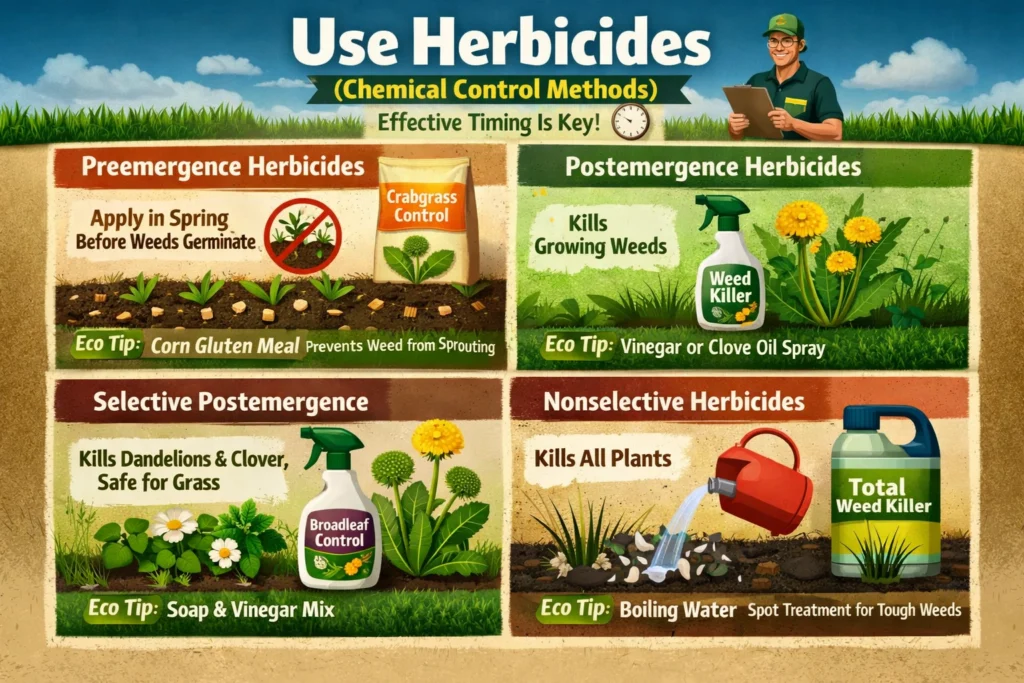
Even with good cultural practices, herbicides may be needed for certain weeds or larger infestations. These are specialized products designed to kill or suppress unwanted plants (weeds) while leaving desirable turf intact when used correctly.
Our lawn care expert team notes that the success of using these solutions relies on timing and the weeds’ growth stage.
Preemergence Herbicides
- Work on seeds as they sprout, stopping them before emergence (pre-emergent weed control).
- Most effective for crabgrass control.
- Apply in spring before germination begins; water in to activate.
- In practice, herbicide products work best when reapplied mid‑season for season‑long control.
Eco‑friendly alternative: Corn gluten meal (natural protein from corn) suppresses weed seed germination while enriching soil with nitrogen.
Postemergence Herbicides
- Kill weeds that are already there and actively growing (post-emergent weed control).
- Proper timing is vital to success, especially when weeds are young or in the fall.
- Available as sprays or granules, so easy to use.
Eco‑friendly alternative: Vinegar‑based sprays or clove oil formulations, which burn down young weeds without leaving chemical residues.
Selective Postemergence Herbicides
- Targets broadleaf weeds such as dandelions and clover without harming turf.
- These herbicides remain the standard for broadleaf control but must be applied meticulously to avoid damaging nearby plants.
Eco‑friendly alternative: Soap‑and‑vinegar mix, fatty acids help vinegar stick to weed leaves, and dry them without harming grass.
Nonselective Postemergence Herbicides
- Kills almost any green plant, including turf.
- Used for tough grassy weeds; homeowners often find spot‑treating more efficient than blanket applications.
- Always follow label directions to minimize risk to desirable plants.
Eco‑friendly alternative: Use boiling water, which kills weeds in cracks without runoff.
Precautionary Tips to Consider While Preventing Weeds in the Lawn
While securing your turf, many homeowners tend to neglect their own safety. So, here are some tips which we urge you to follow:
- Wear gloves when hand‑pulling weeds; our team of lawn care specialists considers it safer and best practice to protect yourself from thorns and sap irritation.
- Remove weeds when the soil is moist. It’s a practical approach, and in our understanding, homeowners often find that it makes root extraction cleaner and reduces the chances of weed regrowth.
- Keep mower blades sharp while adjusting height. Blade care is critical to success as it prevents turf damage that may open space for weeds.
- Mark irrigation lines before aeration, a precaution that remains the standard operating guideline amongst professionals as well. It helps avoid costly damage.
- Always follow EPA product label directions since they are the legal benchmark under FIFRA and the authoritative guide for safe herbicide use.
- Use protective gear (gloves, eyewear, clothing) during herbicide application to safeguard yourself from exposure risks.
- Apply herbicides only on calm days to avoid drifting; this practice ensures both safety and effectiveness.
- Extreme care should be taken to prevent runoff into storm drains, ponds, or streams, a key trust‑building approach for environmental safety.
- Target weeds when young; we have often observed that this principle applies across all methods and products, and delivers reliable results.
- Repeat herbicide applications at regular intervals (10 to 20 days) for persistent infestations; professional practice confirms this is essential for persistent weeds.
Professional vs DIY Weed Control
It’s important to understand that professionals don’t use different products or secret techniques; the methods are the same ones known to any homeowner. The difference lies in accuracy, timing, and consistency.
What may appear simple on paper often turns out to be tricky in practice, and many lawn owners have called us after trying to tackle weeds themselves with incomplete planning or misapplied treatments.
To highlight where expertise makes a difference, here’s a clear distinction between DIY methods and what professionals bring to the table.
| Action | DIY (Homeowners) | Professionals |
|---|---|---|
| Hand-Pulling Weeds | Pull weeds after rain or irrigation; use gloves to prevent irritation | Use specialized tools for large infestations and deep-rooted perennials |
| Mowing & Blade Care | Maintain proper lawn height; sharpen mower blades regularly | Handle large-scale mowing with professional-grade equipment |
| Aeration | Use rental tools for small-area aeration | Perform full-scale aeration and treat heavily compacted soil |
| Soil Testing & Fertilization | Use DIY soil test kits and apply balanced fertilizers | Conduct lab testing and create customized nutrient programs |
| Preemergence Herbicide Use | Apply in spring and water in for activation | Ensure precise timing, reapply mid-season, and cover large areas |
| Selective Herbicide Use | Spot-treat weeds like dandelions and clover | Treat widespread infestations using proper sprayers to avoid turf damage |
| Nonselective Herbicide Use | Use for cracks or isolated patches only | Apply carefully for invasive grasses while protecting desirable turf |
| Safety Practices | Wear gloves and eyewear; apply on calm days | Follow regulations, manage sensitive areas, and prevent runoff |
| Timing of Applications | Target young weeds; apply in fall for perennials | Schedule repeat treatments for stubborn infestations |
Get Professional Help to Make Your Yard Weed-Free
Following the expert’s shared tips to control weeds in lawns will surely help, but it may be challenging. It requires proper planning and timely execution; failing to do so can allow weeds to regrow. So, better to allow experts to prevent weeds in lawns.
Ruben Lawn Care Services & Dumpster Rentals offers quality lawn care services, which can help control and prevent weeds. Our service includes regular mowing, mulching, fall and spring clean‑ups, and sod installation, all of which reduce open space where weeds could take hold. With these practices combined, your lawn will remain healthier and naturally resist future weed growth.
Call us now so our team of lawn care experts can help you get rid of that bothersome weed.
FAQs
When to apply weed killer in the lawn?
Weed killers work best when applied while weeds are actively growing during spring or early fall. Target them during moderate temperatures with moist soil so the solution is absorbed well and the lawn isn’t stressed.
What is the most environmentally friendly way to kill weeds?
The most environmentally friendly way to kill weeds is simple hand removal; just pulling them out by the roots prevents regrowth without applying any chemicals. It’s the cleanest, safest method to remove weeds from the lawn.
How do I permanently stop weeds from growing in my lawn?
Instead of tackling every invader, build turf so dense and healthy that weeds can’t compete. Proper mowing height, soil aeration, and timely pre‑emergent treatments create conditions where weeds simply fail to grow.
Why is controlling creeping charlie and nutsedge in lawns tough?
Creeping Charlie and Nutsedge are tough lawn weeds as they spread aggressively underground, creeping charlie through stolons and nutsedge through nut‑like tubers. This makes them resistant to normal pulling, as any missed root or tuber quickly restores new growth.
