
Lawn fertilization supplies grass with key nutrients, primarily nitrogen, phosphorus, and potassium to enable healthy growth, strong roots, and vibrant color. It restores what the soil naturally loses over time, but doing so requires a well-planned lawn care schedule to prepare turf to withstand changing climate conditions.
In this guide, we’ve included details gathered after thorough discussion with our professional technicians, which will help you understand why it’s crucial to have a proper lawn fertilization calendar, explore factors that affect the lawn fertilization timing, things to do before drafting a complete schedule, and get answers to how often you can fertilize the lawn.
Why is Having a Lawn Fertilization Schedule Important?
Our team of lawn care experts believes a well-outlined lawn fertilization plan that aligns with seasonal shifts helps maintain organized nutrient delivery with precise timing that matches the biological needs of grass, prepares it to tackle heat, cold, drought, mowing, foot traffic, and other stresses.
A random fertilizer application can cause several problems, such as overfeeding or starving the lawn.
Below are some issues that may arise with random feeding:
- Nutrient imbalance: Overfeeding nitrogen or skipping vital nutrients while feeding weakens roots and disrupts healthy growth.
- Soil damage: Inconsistent feeding changes soil pH and lowers microbial diversity, harming long-term fertility.
- Environmental issues: Excessive use of fertilizer soaks into groundwater and streams, causing pollution and algae blooms.
- Seasonal vulnerability: Getting lawn fertilization timing wrong can worsen grass condition and reduce its capacity to tackle summer heat or winter dormancy.
Factors Affecting Lawn Fertilization
Lawn fertilization is affected by several scientific and environmental factors. Grass type, soil composition, climate, seasonal growth cycles, and fertilizer choice. Each factor impacts nutrient requirements, timing, and application methods, making a structured schedule crucial for healthy turf.
- Grass Types
Cool‑season grasses such as fescue and ryegrass grow actively during spring and fall. This indicates they require the bulk of their fertilizer during these periods. On the contrary, warm‑season grasses like bermudagrass and zoysia flourish in summer, so fertilization is concentrated from late spring through early fall.
- Soil Composition and Fertility
Soil pH, organic matter, and nutrient resources affect how well fertilizer is absorbed, making soil testing an essential step before using it. Annual soil testing helps maintain precise nutrient ratios and prevent over‑usage, protecting both lawn health and the environment.
- Climate and Seasonal Conditions
Climate and seasonal conditions play a decisive role. The fertilizer to be used should match local climate conditions and temperature patterns, to ensure nutrients are absorbed during active growth rather than lost. For instance, skipping fertilization before heavy rain helps protect both your lawn and the environment.
- Fertilizer Type
Fertilizer type is the most important, with nitrogen helping leaf growth and density during active phases, potassium strengthening roots in fall, and balanced mixes providing necessary support during seasonal shifts. The right solution for the season and your lawn’s goals ensures that each element contributes to long‑term turf health rather than short‑term results.
Things to Consider Before Finalizing an Optimal Lawn Fertilization Schedule
Once you understand the factors affecting lawn fertilization, the next step is to identify your intent and consider the following prospects before making the lawn fertilization plan:
#1. Identify Your Intent
Before applying fertilizer, the first step is to recognize your goal. As per our technicians, this sets the foundation for your entire lawn fertilization schedule. In fact, they too follow a calendar before fertilizing their own backyard.
To identify your purpose to fertilize the lawn, we suggest you ask yourself:
- Do I need a lush, green lawn with bright colors?
- Does my lawn require stability improvement for heavy use?
- Will protecting soil health balance the environmental conditions?
Answering these simple queries will help you decide whether you want aesthetic appeal, functional resilience, or environmental balance.
#2. Know About Fertilizers
Once you’ve defined your purpose, the next step in outlining a lawn fertilization schedule is picking the right fertilizer. Each nutrient serves a different role in turf health and performance:
- Nitrogen fertilizer is the prominent driver of turf color and density.
- Phosphorus helps with stronger root development, though its use must be carefully managed to avoid water pollution risks.
- Potassium enhances stress and disease tolerance of turfgrass.
- Quick‑release fertilizers facilitate fast green‑up but carry a higher risk of leaching, while slow‑release fertilizers deliver steady feeding and are much safer for soil and the environment.
#3. Estimate Fertilizer Requirement
Before you finalize your lawn fertilization chart, it’s crucial to know how much of each nutrient your lawn actually needs. Calculating the right blend makes the schedule effective and avoids common pitfalls (using too much or too little).
What you need to do:
- Calculate the amount of nitrogen per sq. ft. based on the fertilizer grade and include it in your schedule.
- Modify the quantity to be applied based on different grass types.
- Leave scope for adjustments based on prior execution and outcomes of using different fertilizers to avoid over or underusing.
#4. Evaluate Environmental Conditions
Assessing timing and environmental conditions will help you finalize a fertilization schedule that will actually help in execution. These considerations ensure nutrients are absorbed efficiently and lower risks during application.
How this benefits:
- Helps to know what fertilizer to use in spring, which one is suitable for cool‑season grasses to boost color, and which one will help in fall to support roots.
- You can avoid fertilizing before heavy rain to prevent nutrient wastage.
Pro tip: If you are specifically targeting the spring season, consider having a monthly spring lawn care schedule.
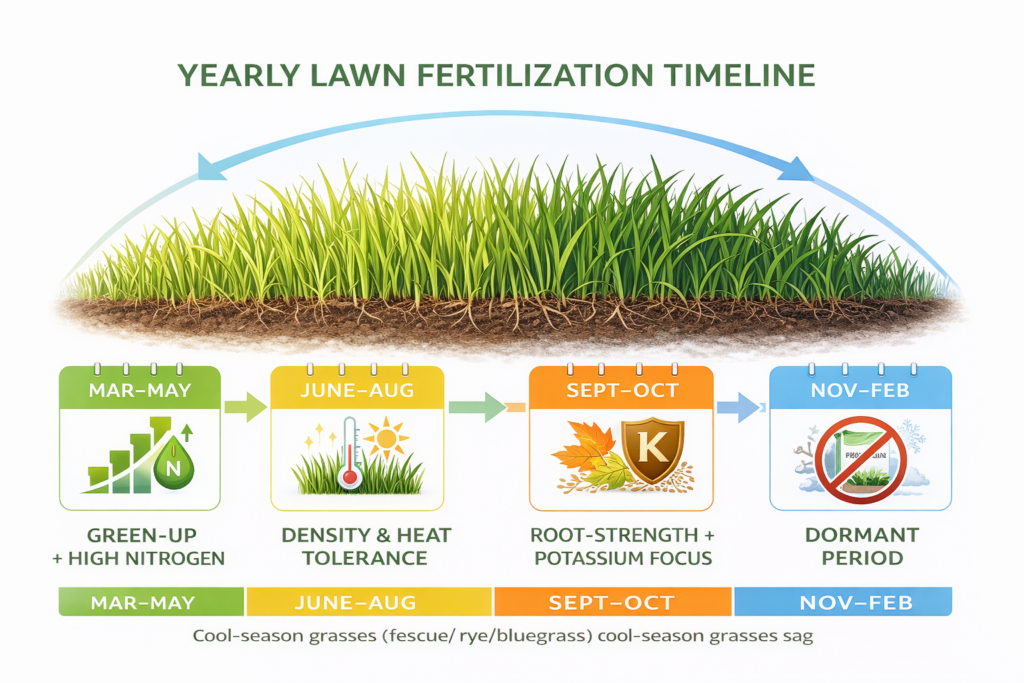
Once you understand the outlining framework, here’s how your lawn fertilization schedule might look:
| Month | Application Stage | Suitable Grass Type | Fertilizer Blend | Why |
|---|---|---|---|---|
| March | Spring kick-start | Cool-season | Balanced mix (10-10-10) | Supports early green-up as growth resumes |
| May | Growth phase | Cool-season | High nitrogen formula | Boosts density and color during active growth |
| June | Summer solidity | Warm-season | Nitrogen-rich, stress-tolerant blend | Warm-season grasses thrive in heat |
| July | Mid-season feeding | Warm-season | Slow-release nitrogen | Supports growth while reducing leaching risk |
| September | Fall recovery | Cool-season | Balanced blend for root strength | Builds reserves before winter dormancy |
| October | Reserve building | Cool-season | Potassium-supportive blend | Improves turfgrass resistance capacity |
| November to February | Dormant period | Both types | No fertilizer applied | Grass growth slows or stops; nutrients won’t be absorbed properly, increasing runoff risk |
How Often to Fertilize Lawn in Madison, WI?
Our team of specialists shares valuable insights on lawn fertilization. They emphasize that just knowing the right combination and accurate timing isn’t enough. The secret to a thriving lawn lies in following a meticulous fertilizing frequency.
Check out this table to know how often to fertilize a lawn:
| Season / Month | Cool-Season Grasses (Bluegrass, Fescue, Rye) | Warm-Season Grasses (Bermuda, Zoysia) | Key Details |
|---|---|---|---|
| Early Spring (March to April) | Light feeding to kick-start growth | Not needed yet | Balanced fertilizer mixture helps green-up |
| Late Spring (May to June) | Strong feeding for density and color | First major feeding | Avoid before heavy rain |
| Early Fall (September) | Major feeding for recovery and root strength | Reduce or pause feeding | Builds reserves before winter |
| Late Fall (October) | Final feeding for winter hardiness | Dormant period begins | Potassium-supportive blend |
| Winter (Nov to Feb) | No fertilization | No fertilization | Grass is inactive; nutrients are wasted |
Upgrade Your Yard With Professional Lawn Care Services
A disciplined lawn fertilization schedule transforms fertilization into a rhythm of care. Each season builds on the last: spring fertilization sparks growth, summer feedings foster resilience, and fall treatments toughen roots for winter. Following this planning ensures your lawn thrives year‑round, while avoiding costly mistakes.
At Ruben’s Lawn Care Services & Dumpster Rentals, we provide quality lawn care services. Our trained lawn care specialists use clean and safe work methods to deliver consistent results and provide your lawn with the care it deserves. We provide flexible scheduling so you can book our services that align with your lawn fertilization schedule.
Call us now to make your lawn look new and healthier than ever!
FAQs
How much fertilizer per 1000 sq ft is needed for a lawn?
Our general recommendation is to use 1 to 1.5 pounds of nitrogen per 1,000 sq ft. But it varies based on nitrogen composition. For example, if a fertilizer contains 20% nitrogen, then you need 5 pounds of fertilizer per thousand square feet.
Can I fertilize my lawn every 2 weeks?
No, fertilizing every two weeks risks over‑fertilization, causing fertilizer burn, excessive lawn growth, weakened roots, and nutrient loss. Most lawns stay in optimal condition when feedings are timed 6 to 8 weeks apart during the growing season.
Should you water lawn after fertilizing?
Yes, you should water your lawn after fertilizing, or within 24 hours. To activate nutrients and stop leaf burn. Consider about ¼ inch of water. Place an empty tuna can on the lawn. Once it gathers ¼ inch, you’ve watered plenty without risking runoff.
What happens if you fertilize grass in winter?
Fertilizing grass in winter is ineffective and can even harm your lawn. We say this because grass growth slows or stops during dormancy, nutrients aren’t absorbed, leading to wasted efforts, likely fertilizer burn, and increased risk of runoff into waterways.
What is a poor man’s fertilizer?
A poor man’s fertilizer refers to snow. It’s a free source of nitrogen and moisture as it captures nitrogen from the atmosphere and releases it into the soil. Other similar low‑cost nutrient sources include kitchen scraps, eggshells, and compost.
