
Renting a dumpster seems simple until you’re unsure whether certain items are allowed inside. Tossing in the wrong materials can lead to surprise fees, rejected pickups, or even fines.
That’s why understanding what you can and cannot Throw Into a Dumpster is so important before starting your project. Whether you’re cleaning out your garage, remodeling your home, or managing construction debris, knowing the rules helps you stay compliant and avoid delays.
From everyday household junk to hazardous materials, each item has specific guidelines. A little planning upfront can save time, money, and unnecessary stress later. Let’s get started!
Why Disposal Rules Matter for Waste Management
According to the Department of Toxic Substances Control, some waste can be hazardous and risky. Proper disposal rules play a crucial role in keeping communities safe, clean, and environmentally responsible.
Following waste guidelines will prevent contamination, reduce landfill hazards, and protect workers. Clear regulations ensure materials are handled correctly, supporting efficient operations and long-term sustainability in modern waste management systems.
- Protect sanitation workers from hazardous exposure
- Prevent landfill fires and chemical reactions
- Reduce soil and groundwater contamination
- Ensure compliance with local and federal regulations
- Promote recycling and responsible waste diversion
- Avoid fines, penalties, and service disruptions
- Support safer transportation and waste processing
What Can You Throw in a Dumpster?
Knowing what belongs in your rental container keeps your cleanup simple and cost-effective. Understanding the items allowed in a dumpster helps prevent delays, extra fees, and rejected pickups. Most roll-off dumpsters accept common non-hazardous waste from home, renovation, and construction projects.
Household Junk
Non-hazardous items from home cleanouts, moving projects, and decluttering that do not contain chemicals, liquids, or regulated components. Some are:
- Furniture – Couches, chairs, tables, and bed frames from home cleanouts.
- Clothing & Textiles – Old clothes, curtains, carpets, and linens.
- Toys & Décor – Non-electronic decorative items and children’s toys.
- Mattresses – Allowed in many areas, sometimes with extra fees.
Construction Debris
Dumpster rentals are very useful for renovation projects. Leftover materials from remodeling or building projects that are dry, solid, and free from hazardous substances can go in this category.
- Drywall & Plaster – Wall and ceiling materials from remodeling.
- Lumber & Wood – Framing wood, plywood, and trim pieces.
- Flooring – Tile, laminate, hardwood, and carpet materials.
- Cabinets & Countertops – Removed kitchen or bathroom fixtures.
Demolition Materials
Debris created during structural tear-downs, provided it does not contain regulated or contaminated materials, are some examples.
- Siding – Vinyl, wood, or non-hazardous exterior materials.
- Insulation – Non-contaminated insulation from walls or attics.
- Doors & Windows – Old frames and glass panels (non-treated).
- Non-Asbestos Debris – General tear-down waste without hazardous content.
Yard Waste
Organic outdoor debris from landscaping or seasonal maintenance that is untreated and environmentally safe.
- Branches & Twigs – Tree trimmings and pruning debris.
- Leaves & Grass – Seasonal yard cleanup materials.
- Shrubs & Bushes – Removed landscaping plants.
- Untreated Wood – Natural wood without paint or chemicals.
Appliances (Non-Refrigerated)
Large household units are accepted if they do not contain refrigerants or hazardous internal components.
- Washers & Dryers – Household laundry machines.
- Stoves & Ovens – Kitchen cooking appliances.
- Dishwashers – Built-in or portable units.
- Water Heaters – Empty tanks without hazardous components.
Heavy Debris
Dense, weighty materials require special handling due to landfill and transportation weight restrictions.
- Concrete – Driveway slabs and foundation pieces.
- Bricks – Masonry materials from construction projects.
- Asphalt – Roofing shingles or pavement material.
- Stone & Gravel – Landscaping rocks and hardscape materials.
What Can’t You Throw in a Dumpster?
Before loading your rental container, it’s just as important to avoid dumpster rental mistakes and understand what cannot go in a dumpster as it is to know what’s allowed. Certain materials are restricted due to safety risks, environmental concerns, and local regulations. Disposing of prohibited items improperly can lead to fines, rejected pickups, or serious hazards during transport and processing.
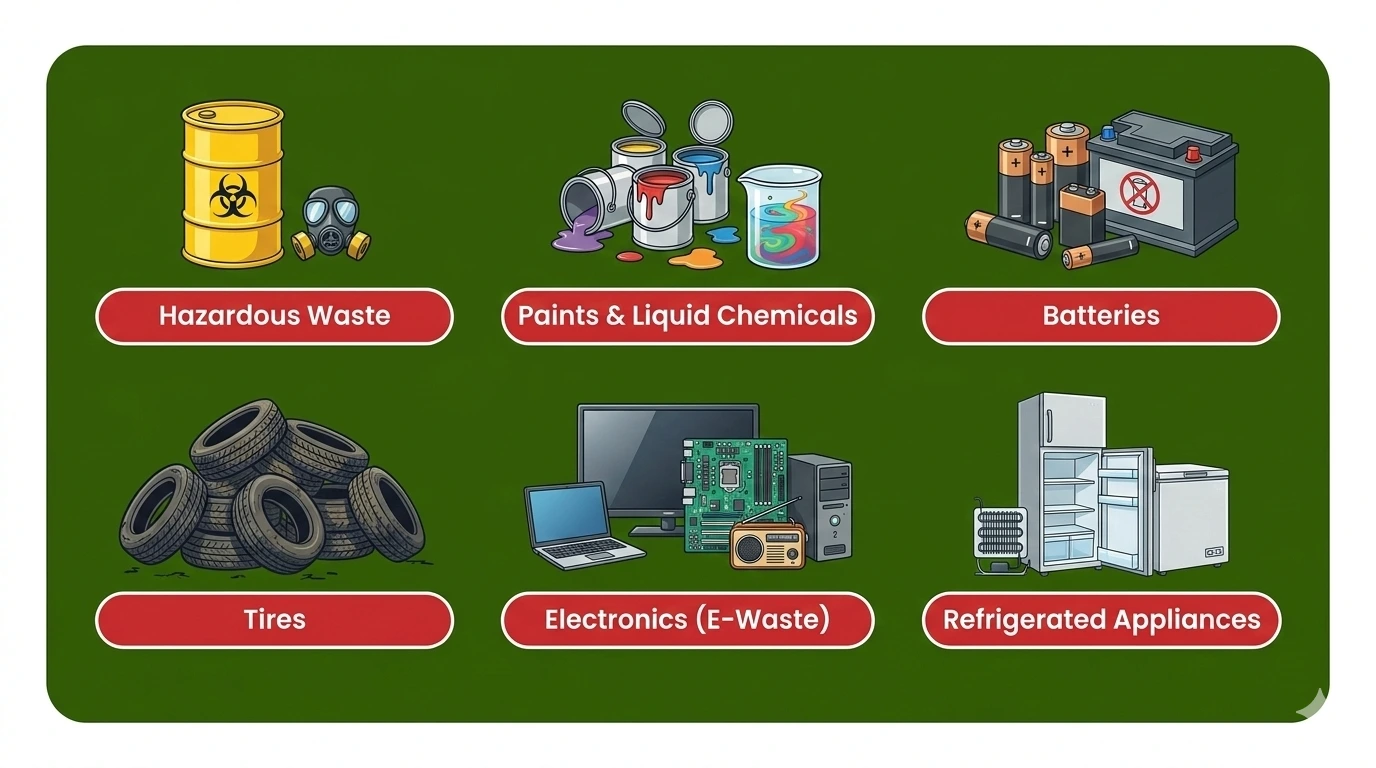
Hazardous Waste
Materials that are toxic, flammable, corrosive, or reactive are unsafe for standard landfill disposal.
- Motor Oil & Gasoline – Flammable liquids that contaminate soil and groundwater.
- Pesticides & Herbicides – Chemical products harmful to ecosystems and water sources.
- Pool Chemicals – Reactive substances that pose handling and disposal risks.
- Industrial Solvents – Corrosive liquids requiring hazardous waste processing.
Paints & Liquid Chemicals
Liquid-based products that can leak, ignite, or cause environmental contamination.
- Oil–Based Paint – Contains solvents that require specialized disposal.
- Latex Paint (Wet) – Often restricted unless completely dried out.
- Paint Thinners – Highly flammable and chemically reactive.
- Cleaning Chemicals – Strong agents that may release toxic fumes.
Batteries
Energy storage units that can spark fires or leak hazardous materials.
- Car Batteries – Contain corrosive acid and lead components.
- Lithium–Ion Batteries – Fire risk when punctured or crushed.
- Rechargeable Batteries – Require recycling under environmental regulations.
Tires
Rubber products are restricted due to landfill regulations and recycling mandates.
- Car Tires – Prohibited in most landfills without special processing.
- Truck Tires – Bulky items requiring separate disposal services.
- Equipment Tires – Heavy-duty materials needing specialized recycling.
Electronics (E-Waste)
Devices containing metals and components that must be recycled properly.
- Televisions – Contain regulated electronic parts and metals.
- Computers & Laptops – Include components requiring certified recycling.
- Printers & Monitors – Electronic waste is restricted in many states.
Refrigerated Appliances
Units containing regulated refrigerants must be professionally removed before disposal.
- Refrigerators – Contain cooling agents harmful to the environment.
- Freezers – Require refrigerant extraction before disposal.
- Air Conditioners – Include regulated gases needing certified handling.
Get the Right Dumpster Rentals for Your Needs
Choosing the right dumpster starts with understanding dumpster rental guidelines and local disposal rules. Also, knowing what you can and cannot throw into a dumpster helps prevent delays, added fees, and safety issues. Always review restrictions, especially regarding prohibited dumpster items, to ensure compliant, efficient waste removal for your home, renovation, or construction project.
Ready to simplify your cleanup? Choose Ruben’s Lawn Care Services & Dumpster Rentals L.L.C for fast delivery, flexible rental periods, transparent pricing, and dependable customer support. Our team helps you select the right size container and explains all disposal requirements upfront.
With same-day service options and no hidden fees, we make waste removal easy, efficient, and stress-free from start to finish. Get your dumpster rentals now!
FAQs
1. What can you put in a roll-off dumpster?
You can place common debris like furniture, construction materials, yard waste, and non-hazardous clutter. Always check your provider’s list of acceptable dumpster materials before loading.
2. Can I put a mattress in a dumpster rental?
Yes, many dumpster rentals accept mattresses, though some may charge extra. Always confirm with your rental provider to avoid surprises and follow proper disposal rules.
3. Can you put glass in a dumpster?
Small, unbroken glass in boxes is usually allowed, but loose or large shards are unsafe. Wrap carefully to protect workers and comply with rental guidelines.
4. How long can I keep a dumpster rental?
Most rentals are flexible, ranging from a few days to several weeks. Your provider can extend the period if needed for ongoing projects.
5. What if I overfill my dumpster?
Overfilling can result in extra fees or a refused pickup. Always follow weight and height limits to ensure safe, smooth service.
